Two male workers wearing uniforms and overalls stand smiling beside an open service van filled with tools and equipment, highlighting the rewarding careers that can start after covering trade school cost. Trees and a car are visible in the background.

Affordable Training for a Stable Career

Home / Invest in Your Future
A diagonal strip of weathered, scratched metal with a gray, textured surface on a black background.

Trade school cost: how we make high-quality career training affordable

Discover scholarships, payment plans, and 
learn-while-you-earn options

High-quality training shouldn’t just pave the way to a better job and a stable career. It should also be affordable. That way, you don’t have to put off building a more secure future. 

Every student at the School of Skilled Trades gets access to options that make it easier to cover a portion of the costs of trade school and get started quickly in an in-demand field.

Plus, we’re a non-profit school, so your tuition dollars go towards your education.

Scholarships

Scholarships

Thanks to our generous donors, we can offer a limited number of scholarships that cover partial tuition fees.

A man in work uniform sits at a table, flipping through papers and taking notes with a pen in a classroom or office setting.
Installment Plans

Installment Plans

You don’t have to pay for everything at once. You can pay your tuition fees over time. 

Two women at a desk in an office setting are getting started on their project, discussing papers. One woman is smiling and pointing, while the other is writing. A laptop and office supplies are visible in the background.
Learn While You Earn

Learn While You Earn

Work during the day, study in the evening, and get help from your employer to pay for school. 

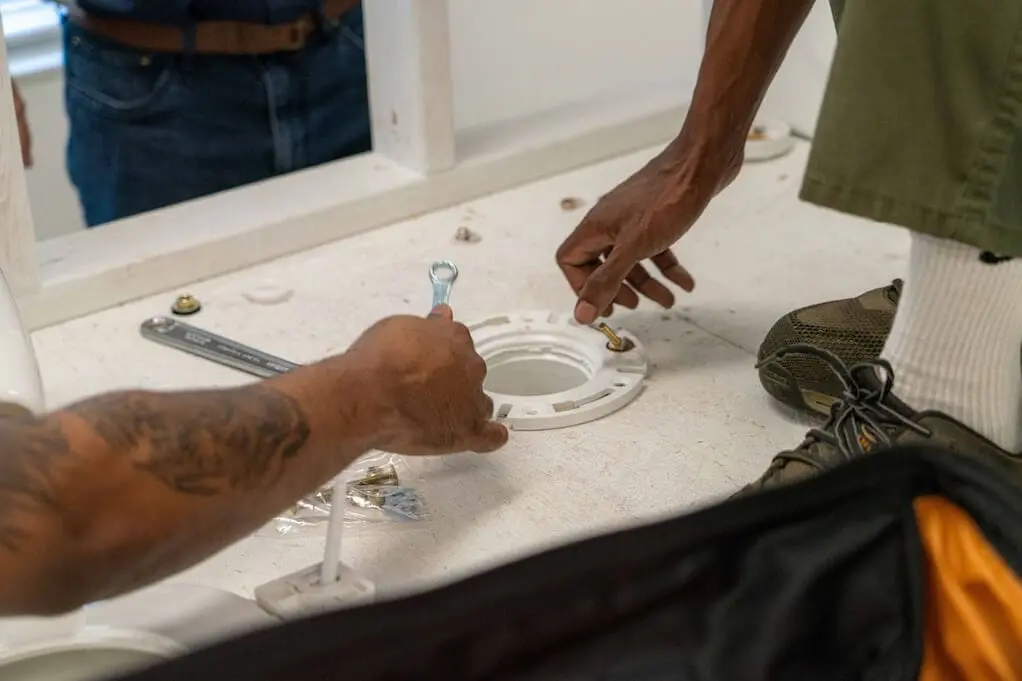
Two people are installing a toilet flange on a bathroom floor; one holds a wrench while the other adjusts a bolt, learning skills that can offset trade school cost through hands-on experience.

Investing in trade school pays off quickly, and for the rest of your career

Trade school requires some upfront costs, but it’s an investment that often pays off much faster than other educational options do.

Our HVAC and plumbing programs take only three months. Once you graduate, you may start in roles paying $20-$22 an hour. In other words, while your friends at community colleges and universities are still in school, you’re on track to earn $42,000 – $46,000 a year or more, just to start. 

We’ve designed our training programs and our job-placement support to help you achieve these goals, and more, sooner than you thought possible.

A man uses a yellow power drill to work on a white fixture inside a room with large windows.
A diagonal strip of weathered, scratched metal with a gray, textured surface on a black background.

You can start your career with little or no debt

Graduates* of four-year universities in North Carolina have, on average, more than $29,000 of student debt. Community college students typically borrow less but still need to cover tuition and living expenses for two years or more. Our accelerated programs keep total costs low. And our payment plans and learn-while-you-earn opportunities help you avoid going into significant debt.

*Source: Average Student Debt [Retrieved 10 February 2025]

You can keep more of what you earn

Minimal student debt plus a higher paycheck means you get to keep more of what you earn. That makes it easier to cover your monthly expenses, and it creates options. Start saving for that new phone, building your emergency fund, or planning a fun day out with your kids—or any goal that matters to you and your family.

Start Your Career Today

Have questions about how to pay for trade school? Fill out the form, and we’ll schedule a quick call to answer your questions about scholarships, payment plans, and more.  

The School of Skilled Trades is a non-profit school, meaning we invest in helping you learn, not in making a profit. We’re licensed by the North Carolina State Board of Community Colleges, so you learn valuable skills from qualified instructors with years of field experience.